Food

The poor you will always have with you

-Matthew 26:11

I finally volunteered at the local food back this weekend. Shame on me for taking so long. Food is a kind of charity I feel good about. I’ve been a customer and then a volunteer of foodbanks in my life.

I can think of two outstanding books about struggling with basic sustenance:

Charles Dickens Little Dorrit is a story about a Victorian era young woman born in a prison for men who didn’t pay their debts. She was born in debtors prison and lived there until her adulthood allowed her to get a job outside to pay for her family’s food. We have a modern system of bankruptcy now, which seems an improvement.

George Orwell Down and out in Paris and London is Orwell’s story of a time when he found himself in a period of no income. He had to find a way to scratch together enough to keep body and soul together until he started his next job.

My teenager was feeling sympathetic towards the homeless people we saw on the streets around us. I love her kind heart. And I figured if she could see how the charity systems work for the poor around us, it would ease her heart. Our life with her has included relying on charity.

When I was her age, my family was well acquainted with the systems that fed those who couldn’t. I wrote the story of butchering a road kill moose here. Alaska used that system to share food with those in need.

Later, I got become a cook for a YMCA day care, and had to feed 70 people (mostly little kids) breakfast lunch and snack every day. The food came from the local foodbank. That’s when I first learned about the lifecycle of the food industrial complex. Grocery stores take in huge amounts of product, fresh and processed and do their best to sell it all.

A percentage is left over, and that gets passed on to the tail end of consumers. As a cook for a charity institution, I ransacked these misfit items and turned them into food. There were some weird items to get through.

At the food bank this weekend, these institutional over flows were distributed to the individual consumer. The baked goods, meat, boxes of crackers and other random things were available for distribution.

We had 250 banana boxes and we stuffed them with similar items so each box had a hearty assortment. This was not the sort of thing that could be automated. It was a by-feel kind of thing. Each box had items I would have been glad to have. The recipients signed up for their box. They drove through in their cars, present a number to get their box.

At the end were a few folks without cars. A smaller box with the extra items that didn’t make it into the 250 were put into the hands of the walk-ups. They’d been waiting under a tree for their turn.

Clearly the Saturday was a culmination or a week of accumulating the food for distribution. And the food being stuffed into the boxes was the result of a lot of connections with merchants so that these extras could be gathered and given to people who wanted them.

My daughter enjoyed the productivity and obvious benefit of what we did.

There will always be a reason for a person to need food. Healthy fruit trees will make more than is easily harvested, and this is an example of how generosity is built into the world.

Different times and places did it differently. I got to see again how sharing and generosity is done in my time and place.
What do I want?

The chicken meat has frozen itself around the bars of the basket in the freezer. Earlier, I’d jammed a butter knife into the packages to free them. I got a few, and some were too stubborn to extract.

And today I have no chicken for dinner. What will I do? I’m hungry!

My plan is foiled. I had purchased chicken to solve this problem, but this best laid plan came to naught.

What choices am I left with?

Freedom of choice is best served with time. When I have time I have more choices. Since I burned up my time by giving up on freeing the chicken from the cage in the freezer, I have to come up with another choice.

I have money. I have a car. I could go buy some food.

I remember other hungry times when I had a car but no money. That was a time to look in the cupboard.

What is in my cupboard? I had been looking for meat, because I wanted protein. What are the other options?

Time and resources increase the choices. Resources are the result of work done previously, often by me. Did I stock my cupboard previously? Did I save money from a paycheck I earned before?

Some resources arrive as gifts. When I play monopoly, I get 200 dollars after I pass GO. I have the gift of 24 hours each day I live. I can also have the resources that were given to me by the family I was born in. Do they give me food that they worked for?

My choices are dependent on my location. What is common here and what is rare and precious? It could be easy to get water near a lake, but it is rare in the desert. In the same way, I could have natural inclinations that are valuable. I am a person who writes, that could be rare and valuable. I also could stockpile skills that people need, to trade for

Chicken

I have an embarrassment of riches in my choices right now. I’m stuck in a rut. As you can tell, I have chicken for dinner a lot. Is that the choice I really want?

I know I could change it. I could start choosing to eat no meat at all. Or NOTHING but meat. Big choices is where big changes start. What do I want?

Notice

While staying in Cologne our hotel was in view of the cathedral. I watched people walk from the window. And I heard the bells.

The bells rang on the hour. Not every hour. I couldn’t find the pattern during our stay. I was teleported to a time when the bells would tell the city to pray. Bells were and still are a way to notify the people all around.

BONG

Pay attention!!

BONG

Stop and notice!!

BONG

This is an ancient human need, both individual and community.

I need to join the gathering. Or I need to take an action—like closing the gate.

The whole community may need to pause and mourn when someone dies.

I hear these church bells that have been all those things for the people around for centuries.

We all know that the sun rises and sets every day. We can pay attention to the moon waxing and waning, and even the stars moving in the sky. The bells were created by human beings to add new points of significance in the day.

The age of industry created non-agrarian methods of production. Factories required people to gather at times not tied to the sun, and bells were the way to call out the start of the work day. The workers came—DON’T BE LATE!—and the machines could make the things that people needed and wanted.

The business in the area would have had competing bells that would sound out. This was the way to communicate far away. The factory needed people to show up for the work at the factory, And the people wanted to get paid.

It was hard to get used to the factory’s demands. The work force was agrarian peasants who got up with the sun. The machines of the factory were not affected by light or dark, and they would work winter or summer. The industrial age brought so much productivity. The bells would wake us up in the dark of night.

And in its season, more rest. Long days in summer, and shorter in the winter. That must have been part of the “innovation” of daylight savings time.

Now, I strap a watch to my body that taps my wrist for notifications, and a device in my pocket the chimes to remind me to do a task.

I have a feeling in my gut that this movement is out of control. Was I meant to be notified and brought to attention in all these ways? If everything is important, then nothing is important.

But those bells are so beautiful. I want to hear them. Their significance as a call to action is lost and only the beauty remans.

History adapts and never changes

I was last in Cologne 18 years ago. My impressions of the cathedral and the surrounding businesses are updated with what is happening now. It’s been a pilgrimage destination for centuries. And the Romans were there even before the cathedral.

Pilgrimage is a place for commerce. There are businesses surrounding the square, with anything I want.

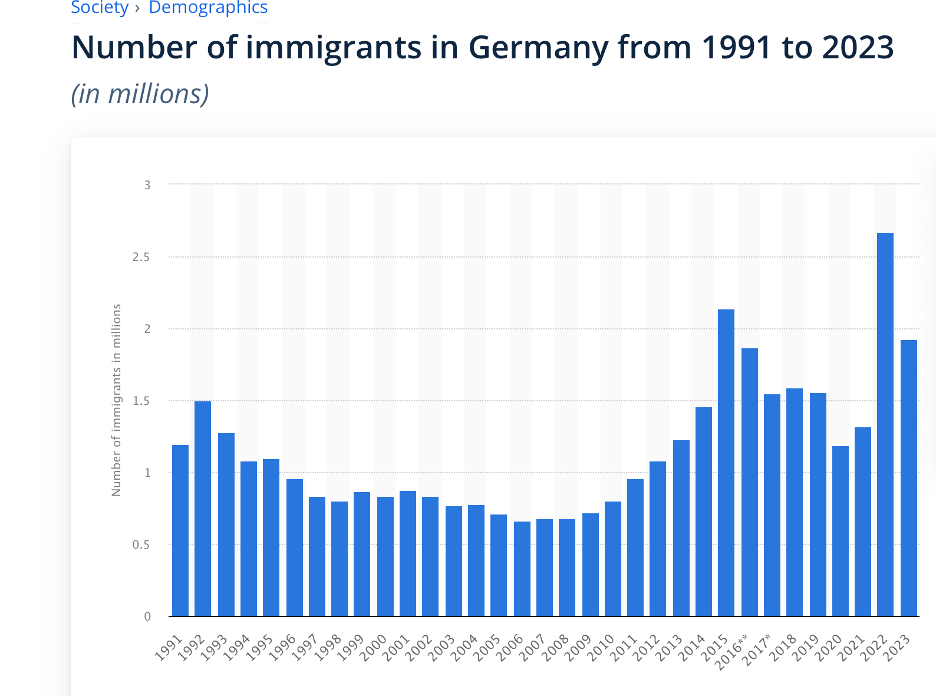
I last visited in 2007, when Germany admitted .67 million immigrants. They have admitted more and more immigrants since then. In 2022, 2.67 million were admitted. What does that mean?

I saw a different flavor in Cologne this year. Literally. The square around the cathedral had a lot of take-out shops. The German beer shops with traditional food are there. From my view, the other styles of food outnumbered the local food.

I came to Germany to have an experience. I can have all these international flavors at home in California. As we saw the sights, I got hungry. My family was exhausted, so I let them go back to the hotel. I set off alone and hungry. I had a credit card. And some currency.

I had a mission. The taste of Germany that only the land itself could give.

I found the first German-seeming pub and looked at the menu. It was helpfully marked CASH ONLY.

Ooh. The first barrier. I had SOME currency, but what if it wasn’t enough? They wouldn’t take my credit card, and I figured I’d better keep looking.


Surely  closer to the cathedral would be have options. I up there, and saw waiters bringing bowls of soup out to the tables. This had to be it!

After the waiter dropped his food off, I asked him where to go to be served. He pointed into the door vaguely.

Ok, I went inside and looked around. I saw tables, and a menu by the door. But I didn’t know what I was supposed to do to catch the server’s attention. How did I do this?

The sky was darkening. My hunger was more demanding.

I gave up and walked back to the shop name Istanbul kebap. I felt it as a personal failure. The Turkish guys making the plates were eager to take my money and give me food.

I took the bag with my food back to the hotel. It was delicious, and Veronica ate half the rice and chicken. When I put the fork of cabbage salad to my tongue, I got a zing.

Mediterranean food can be spicy. Hot sauce is everywhere in southern California too.

But this?

German food has a reputation as bland. When the cathedral was only a couple centuries old, the drive for spices gave Christopher Columbus a reason to set off for America.

I could imagine the medieval Europeans with nothing but cabbages and turnips in the dark ages.

I shook my head. This Turkish shop had found the native taste for their recipe.

The chef used horseradish for the kick it needed. People are always on the move to adapt to the landscape they are in. That hasn’t changed.

This German ingredient—flavor—appeared in the middle eastern dish served in Cologne. It’s perfect.