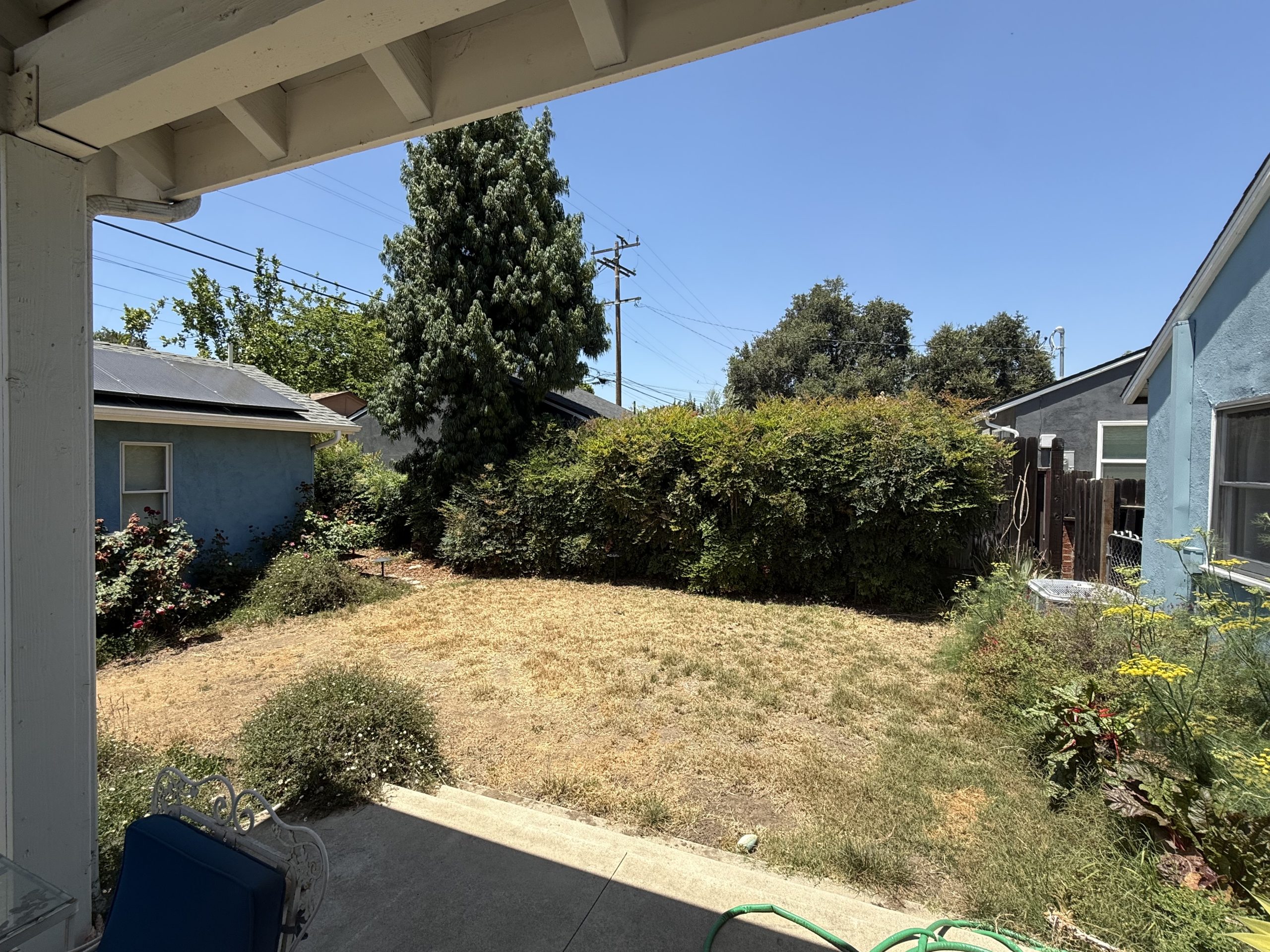
hiding feeling
don’t speak in the first prrson
but decisions are made from the brart
hiding feeling
don’t speak in the first prrson
but decisions are made from the brart
My friend Lynda told me I performed a mitzvah last week. Her father’s home was empty after her stepmother had passed after a long life. I came to help with all the things.
The many many things in the one big thing—the house.
After a few days with this house of possessions relics and memories, I am haunted by Leo Tolstoy. The Death of Ivan Illych, his short story of a long life touches this subject in his human way. This phrase:
In the dining-room where the clock stood that Ivan Ilych had liked so much and had bought at an antique shop
The stepmother had that clock.
I have that clock.
Lynda has that clock.
Who is this Ivan in the story? Why should Tolstoy write about his deah?
Ivan Ilych’s life had been most simple and most ordinary and therefore most terrible.
Oh my. I and my normalno life of ordinary simplicity just like Ivan’s terrible clock and terrible life and death.
So many precious things big and little we tossed. So many precious things we carefully saved. Who was this woman I never met?
Coming home at night to sleep, I look at all my surrounding possessions with new eyes.
Who was Ivan Illyich?
At school he had done things which had formerly seemed to him very horrid and made him feel disgusted with himself when he did them; but when later on he saw that such actions were done by people of good position and that they did not regard them as wrong, he was able not exactly to regard them as right, but to forget about them entirely or not be at all troubled at remembering them.
Oh, Vanya. Yes. Have I settled and made compromises? Am I troubled by the memory that I once was troubled. Trading my ethereal dreams for shiny and dusty things I could dream of improving.
What is this house I am living in? What is this life I have rescued from the dustbin of history with the hope of making something beautiful?
or at least comfortable?
Or maybe I hope for something I am not ashamed of
At least I fell into a same unremarkable sameness as those next to me
Do you see me Tolstoy?
Or maybe I see myself
Would I choose myself at an antique shop? Would fastidious Ivan thought me worth keeping?
He would enter and see that something had scratched the polished table. He would look for the cause of this and find that it was the bronze ornamentation of an album, that had got bent. He would take up the expensive album which he had lovingly arranged, and feel vexed with his daughter and her friends for their untidiness — for the album was torn here and there and some of the photographs turned upside down. He would put it carefully in order and bend the ornamentation back into position. Then it would occur to him to place all those things in another corner of the room, near the plants. He would call the footman, but his daughter or wife would come to help him. They would not agree, and his wife would contradict him, and he would dispute and grow angry. But that was all right, for then he did not think about It. It was invisible.
Tolstoy knows from the start that these little objects are not the thing. After days which the house of the deceased I know—from story and evidence—she clung to the things.
Falling asleep in my carefully selected bed and linens, I am certain I am the same far more than I like—more than is healthy. If I arrange a shelf with a collection of preciosas, does that mean I can found that against the moments of malice I have to the people I should love most?
Am I hoping to fool others so much I that believe the good impressions I have crafted?
Will the flourishes of the golden frame lift the value of the portait it surrounds?
Tolstoy gave Ivan in his last days of life a revelation:
And suddenly it grew clear to him that what had been oppressing him and would not leave him was all dropping away at once from two sides, from ten sides, and from all sides. He was sorry for them, he must act so as not to hurt them: release them and free himself from these sufferings. “How good and how simple!” he thought. “And the pain?” he asked himself. “What has become of it? Where are you, pain?”
The exotic teacups and the ceramic elephants a mask to the suffering and the decayed spirit. It’s not new. I hope to release the piles of things I don’t need I reach for the simple.
Our songs travel the earth. We sing to one another. Not a single note is ever lost and no song is original. They all come from the same place and go back to a time when only the stones howled.
Louise Erdrich
Words live in my head. When I think them, they are In my head. Getting ready to write my post here, I have to think it through. Live is full of material to write about. I make a selection, pursue is and come up with this every week.
When I speak words, though they come out of my mouth. Or my throat. Then again, they come through my lungs. I notice this more when I sing.
OH yes, the singing. I breathe in from the wide world and breathe it out again, adding my own vibration. Sometimes that is far easier than arranging sentences.
With singing and music, I add the hum.
With writing, the readers, the audience have to choose to read and make it alive, to hear the thrum of meaning in their own heads.
Here’s an update on my musical pursuit. I let you all know I”d been working on singing and playing 100 new songs. I’m up to 66 (here’s the current list).
As I’ve pursed this goal, and kept on it, more opportunities appeared. I found a friendly Open mic, and signed up. I saw a musical friend there, and he introduced me to a bass player. I had a great set and they both offered to join me on the next open mic and be my backup band.
With that confidence boost, I invited more people to come to the next open mic. A classical cellist was interested and she joined me too.
Nothing wins like winning so I made music performance a higher priority on my schedule.
A drummer from a local band was joining in with a jazz ensemble, so I blew off another obligation to see him play. He was delighted to see me and introduced me to the rest of the band.
Their organist Mass plays every week at another local spot. I dropped in on that one and found he had a whole jazz drop-in situation.
Now I have a reason to learn to practice jazz vocals. He said he’d play behind me if I wanted to sing.
It is so right that a jazz musician holds the gate open “come on in!”
Miles David said there are no wrong notes in jazz, only notes in the wrong places.
Some art is meant for music, and some is meant for sentences.
Or maybe words.
As I play in each of the spaces, I learn more how they fit.
How I fit
There is a lot of Buzz about A.I.
“AI will act as your personal force multiplier, streamlining your daily schedule, sparking creative ideas when you’re stuck, and handling repetitive tasks so you can focus on what truly matters to you.”
Or
“AI will quietly become your most reliable co-author, research assistant, project manager, and idea sparring partner—handling the tedious parts of writing your next book, organizing your knowledge into fresh frameworks, spotting blind spots in your arguments, and giving you instant second drafts while you stay focused on the uniquely human parts: insight, voice, and meaning”
That’s an introduction in the words of AI engines Grok and Gemini. My readers (hi!) can see immediately that is not something I would write. I write differently.
A.I. aficianados would say that the A.I. could be trained to write like me.
Probably. I am a person of quirks, habits and patterns, many of which are intentional. I could train (program) a computer to us those same consistently.
And if I believe the A.I. it would become a “personal force multiplier.”
But is it art?
Is it silly to always be thinking about art? Sometimes a spade is a spade, especially when I need to move a little dirt.
Flashing back to Miriam in my first book, I think of camels crossing a desert. If me and the camel caravan need to get out of the blazing hot sun, it doesn’t need to be art. Miriam needs a respite now, and anything that supplies shade is a blessing.
Yes and yes. Use the tools and the grace that comes. Maybe it’s the shadow of a big rock, and maybe it’s an A.I. engine.
I’m still pondering Leo Tolstoy’s definition of art:
When the artist takes a feeling he or she has had, expressed it and is able to inspire that same feeling in the audience, that is art.
Art makes the connection, Inspiring and transmitting a feeling from person to another.
If a person created the shade with intention and imbued it with sentiment or emotion and if that creative self-expression had enough craft to spark an echoing response in another person
Art made something new in the world. That connection. The best art comes with a sense that I already know what has been shown.
The newness is the connection between the artist and the feeling arising in the observing audience.
With this working definition, I can justify that A.I. output cannot be art. There is no person originating a feeling.
And no person to connect to. Art is not only about beauty. I am beginning to see it’s about connection as well.
What will the new year hold for me? I eagerly desire to consume or experience more art, and even better to create art.
In the library I found “What is Art?” by Leo Tolstoy. It’s not an novel, not like his epic War and Peace or Anna Karenina. The was an academic exploration with careful and tortured sentences—poor miserable academics!
I discover this conclusion that art is how a person can share a feeling with others. When I feel alone, stuck with the feelings, thoughts and experiences I long for connection with someone else.
Tolstoy concludes that when a person shares a story, for example, and the audience feels what the story teller felt, that spark of transfer is the connection that makes it art.
One answer to the question
“What is art?”
Is that what you are sharing with me, Leo? Maybe your convoluted sentences gave me the thrill you got when you arrived at this definition. I can carry around this answer like a gemstone in my mind.
Can I be pleased with my art if it meets this specification? There is a warm feeling in my heart as I accept it.
Is that enough? And also, how can I do it even better?
That’s what this blog is about, to share my ideas, thoughts and feelings. To do it to the best of my ability.
In my isolation, I’m not alone. Tolstoy called it, and other artists must feel it:
I don’t know how I’m doing. Did I arouse that feeling in my readers?
If it is read, it must have achieved a bit of that. Interest is the lowest rung. Stronger feelings are higher up the ladder.
And a response!
In this digital landscape, a like or even better a comment back, is an indication
I plucked a resonant string.
This is me realizing and appreciating the connection I have with my readers, as we make this together.
Also, it’s me asking:
If you read it, click the heart.
If it made you think or laugh, I’d be very interested to hear it.
We don’t have to be alone in this human experience.
Good things
2 The wedding people
3
good things by samin nosrat
Caliban’s War
The General theory of Employment, Interest, and MOney by John Maynard Keynes – finished
What is Art by Leo Tolstoy
Art and Fear
Monkey King
The duckling had satisfied himself with what he was: Ugly.
He had a good personality. Or that’s what he told himself for consolation. His very weird bleached feathers could maybe seem interesting, but try not to bring attention to them.
It seemed obnoxious and off-putting to be as white and big as he naturally was.
No one else seems to care that he keep himself nice so he stopped making the effort.
He didn’t work to stay too clean. All the others around him were speckled. Was he supposed to be slovenly?
There was a difference though. He knew the other birds around him were clean. They naturally had speckles, and he could only get them if he didn’t wash.
He liked being clean. He didn’t feel like himself when he was speckled and dirty. But he didn’t like standing out.
Things weren’t comfortable either way. If he didn’t make the effort, he could be speckled and blend in with the others.
Every once in a while he couldn’t stand it anymore and was as clean—as white, smooth and sparkling as he could possibly be. He would strut around alone, feeling fine and handsome in his natural state.
He felt he had to hide at these times, but he still wanted to feel his full self.
“How else will I be recognizable to my people?
If I find them.
If they exist.”
I’m piggybacking on a well-known story. The ugly duckling is a comforting story of the true nature finding belonging and appreciation.
If that duck was trying to find his people, I’ve been trying to find myself again.
I know who I am, I know what I’ve been capable of. But somehow this year I started to let things that made me ME slip away.
I’m getting ready to publish my 5th book, a handbook. This weekly wonder, this substack is my weekly proof that I’m a writer. Past performance was not enough for me, I keep this blog up so I feel it in my bones. I am a writer because I write.
Although I’ve kept up with writing every week, I haven’t really saved my writing. I have always made a careful point of saving each offering in it’s file. Somehow I stopped this year. Did I start neglecting even last year…?
This year I also stopped tracking my books. I have kept a list of them for more than 10 years.
But this year I didn’t.
What’s happening? How do I explain this change?
Like the ugly duckling that comforts himself in his laziness. I have not felt like myself, and I let things slide.
I don’t ‘know what is possible this year, but I don’t want to settle and not show up as my best self. Come on Ducky! Brush off the dusk and see what you can be. There is a big world out there.The duckling had satisfied himself with what he was: Ugly.
He had a good personality. Or that’s what he told himself for consolation. His very weird bleached feathers could maybe seem interesting, but try not to bring attention to them.
It seemed obnoxious and off-putting to be as white and big as he naturally was.
No one else seems to care that he keep himself nice so he stopped making the effort.
He didn’t work to stay too clean. All the others around him were speckled. Was he supposed to be slovenly?
There was a difference though. He knew the other birds around him were clean. They naturally had speckles, and he could only get them if he didn’t wash.
He liked being clean. He didn’t feel like himself when he was speckled and dirty. But he didn’t like standing out.
Things weren’t comfortable either way. If he didn’t make the effort, he could be speckled and blend in with the others.
Every once in a while he couldn’t stand it anymore and was as clean—as white, smooth and sparkling as he could possibly be. He would strut around alone, feeling fine and handsome in his natural state.
He felt he had to hide at these times, but he still wanted to feel his full self.
“How else will I be recognizable to my people?
If I find them.
If they exist.”
I’m piggybacking on a well-known story. The ugly duckling is a comforting story of the true nature finding belonging and appreciation.
If that duck was trying to find his people, I’ve been trying to find myself again.
I know who I am, I know what I’ve been capable of. But somehow this year I started to let things that made me ME slip away.
I’m getting ready to publish my 5th book, a handbook. This weekly wonder, this substack is my weekly proof that I’m a writer. Past performance was not enough for me, I keep this blog up so I feel it in my bones. I am a writer because I write.
Although I’ve kept up with writing every week, I haven’t really saved my writing. I have always made a careful point of saving each offering in it’s file. Somehow I stopped this year. Did I start neglecting even last year…?
This year I also stopped tracking my books. I have kept a list of them for more than 10 years.
But this year I didn’t.
What’s happening? How do I explain this change?
Like the ugly duckling that comforts himself in his laziness. I have not felt like myself, and I let things slide.
I don’t ‘know what is possible this year, but I don’t want to settle and not show up as my best self. Come on Ducky! Brush off the dust and see what you can be. There is a big world out there.